English Springer Spaniel SVG Dog
A Designer’s First Look: Friendly, Clean, and Ready for Stitching
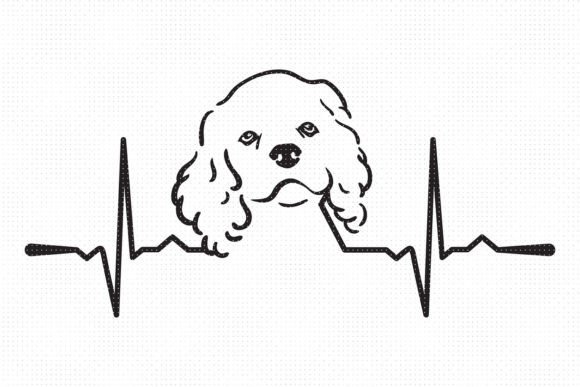
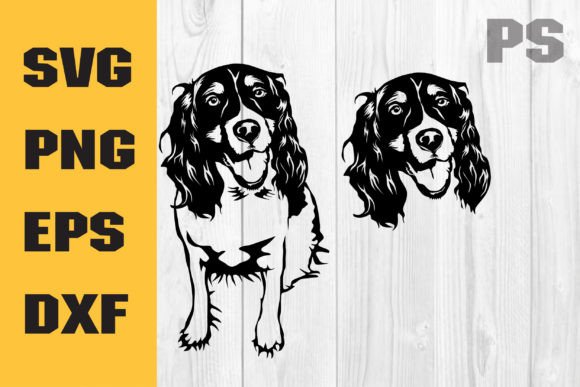
When I opened English Springer Spaniel Svg, Dog, my first thought wasn’t “cute”—it was “workable.” The silhouette balances charm and clarity: a gentle head tilt, expressive ears that sweep just right, and a compact body shape that avoids visual clutter. It doesn’t try to be photorealistic—thank goodness—and that’s its strength. As an embroidery designer who’s stitched hundreds of pet motifs, I know overly detailed dog silhouettes often collapse into muddy satin stitch or demand impossible thread tension. This one breathes. Its clean vector lines translate smoothly into stitch paths, and the negative space around the muzzle and legs gives breathing room for stabilizer and fabric movement.
Real Project Test: A Personalized Embroidered Tote for a Local Dog Rescue Shop
Last week, I used English Springer Spaniel Svg, Dog on a natural canvas tote for a boutique fundraiser. We chose a medium-density tear-away stabilizer, 40-weight polyester thread in warm brown and cream, and a 4” hoop. The result? Crisp edges, no puckering, and a design that read instantly—even from six feet away. Customers paused at the booth not because it was flashy, but because it felt *authentic*. That’s the quiet power of this file: it supports storytelling without shouting. It’s equally at home on a baby onesie (scaled down to 2.5”) or a linen tea towel (with gentle fill stitch density), never overwhelming the material or the moment.
Where It Shines—and Where to Pause
English Springer Spaniel Svg, Dog excels in projects where warmth and approachability matter most: personalized gifts for dog lovers, nursery decor, embroidered patches for scout uniforms, and small-batch apparel for local pet businesses. It reads well at 3–4” on sweatshirts and holds up beautifully on structured items like aprons and pillow covers—especially when paired with a light cutaway stabilizer to prevent shifting on dense weaves.
But here’s what I watched closely:
- Curved surfaces: On baseball caps, I reduced the height by 10% and added a slight curve to the baseline—vector files like this one make that adjustment intuitive in Illustrator or Design Space.
- Thin or stretchy fabrics: For lightweight cotton tees, I doubled the stabilizer and tested stitch density first. The design’s moderate detail means it won’t drown delicate knits—but don’t skip that scrap test.
- Dark backgrounds: The PNG with transparent background is invaluable for mockups, but in real stitching, I always preview the design in black-and-white grayscale. On navy or charcoal, I swapped to off-white thread instead of stark white—it reads softer, more handmade.
- Small hoops under 3”: While the SVG scales cleanly, tiny ears and eye details can blur if shrunk too far. For 2” patches, I simplified the inner ear line manually—not a flaw in the file, just smart design judgment.
What This Design Says About Your Craft Business
When your Etsy listing features English Springer Spaniel Svg, Dog on a mockup of a linen market bag, you’re communicating care—not just in execution, but in curation. Buyers notice when a design feels intentional, not generic. This file avoids clipart energy. It has personality without pretension, making it ideal for craft businesses building trust through consistency: same friendly spaniel across holiday ornaments, baby blankets, and embroidered dog bandanas. That cohesion strengthens brand recognition, especially for sellers offering coordinated collections.
It also earns customer confidence. A well-proportioned, balanced silhouette like this one stitches cleanly, which means fewer re-dos, less thread waste, and faster turnaround—critical when fulfilling custom orders during holiday season or wedding gift rushes.
Practical Notes Every Embroiderer Should Check Before Stitching
- Test on scrap fabric first—especially if using textured weaves like burlap or terry cloth. The design’s open shape handles texture well, but thread tension shifts fast.
- Review stitch density in your embroidery software. Some auto-digitized versions of similar files overfill the chest area. If yours does, reduce fill density by 10–15% for breathable results.
- Confirm hoop size compatibility. While the SVG scales freely, your machine’s maximum hoop dimension sets the practical upper limit—don’t assume 5” will fit without checking.
- Inspect corners and curves in digitized form. The EPS and SVG are clean, but once converted to PES or DST, tight ear tips may need smoothing. Zoom in before sending to the machine.
- Check licensing before selling finished items. The product description lists file formats—not usage rights. If you plan to sell embroidered goods commercially (e.g., on Etsy or at craft fairs), verify whether the license permits derivative commercial use.
- Use proper stabilizer for your fabric type. Lightweight cutaway for knits, tear-away for stable wovens, and fusible + tear-away for towels or napkins.
- Compare contrast on light vs. dark fabric in printable mockups. A warm tan thread pops on ivory linen but disappears on beige twill—swap to oat or taupe for balance.
Final Thought: Not Just a Graphic—A Reliable Design Asset
English Springer Spaniel Svg, Dog isn’t a trend-chasing novelty. It’s a thoughtful, versatile asset—one that supports your voice as a designer, not drowns it. Whether you're a solo embroiderer building a craft business, an Etsy seller curating heartfelt gifts, or a small shop owner refreshing seasonal merchandise, this file earns its place in your library because it works quietly, consistently, and well. It respects your time, your machine, your fabric—and most importantly, your customer’s expectation of something genuinely made, not mass-produced. In the world of Crafts and Graphics, that kind of reliability is rare. And worth every stitch.